Account Warm-Up: Your First Video Isn't Shadowbanned, It's a Cold Start
Your first video stalled at 200 views and the internet says you're shadowbanned. TikTok's own pipeline has no account-age gate. Here's who warm-up actually helps — and who's wasting three days.
You posted your first video on a brand-new account and it froze at 217 views. Nothing is broken and you are almost certainly not shadowbanned — you are watching a recommender system's cold start, the normal state of any algorithm that has no data about you yet. "Warm-up" (spending a few days scrolling and liking before you post) is a real and reasonable habit for people running many accounts at once, and mostly a waste of three days for someone posting from their own phone.
The problem, honestly
Here is the week almost every new creator has.
You film something you're proud of. You post it. Twenty minutes later: 84 views. An hour later: 190. The next morning: 217, and it never moves again.
So you go looking for an answer, and the internet hands you one immediately: you got shadowbanned — secretly punished, your reach quietly capped, because your account was too new and you posted too fast. The fix, every guide agrees, is a warm-up: three to ten days of scrolling, liking, commenting and following before you're allowed to post anything.
That story is emotionally perfect. It explains your bad number, it isn't your fault, and it comes with a to-do list.
It's also mostly wrong — and it costs you the one thing a new account actually needs, which is posted videos to learn from.
⚠️ Notice who publishes most warm-up guides. Scroll to the footer of the top search results and you'll find companies selling proxies, antidetect browsers, bulk-account services, and "clipping" tools. That doesn't automatically make them wrong — but they're describing the world of running 50 accounts from one machine, and quietly selling it to you as advice for running one.
What "warm-up" actually means
A warm-up is a waiting ritual. Before posting anything, you use the app like a normal human for a few days: scroll the feed, watch things to the end, like a few, follow accounts in your niche, leave a couple of real comments.
The claim attached to it is that this makes the platform "trust" your account and unlock your reach.
Half of that is true, and it's worth separating the halves:
- True: the app genuinely learns from your scrolling. That's not trust — that's data.
- Not established: that there is a hidden gate labelled "account too new" that scrolling unlocks.
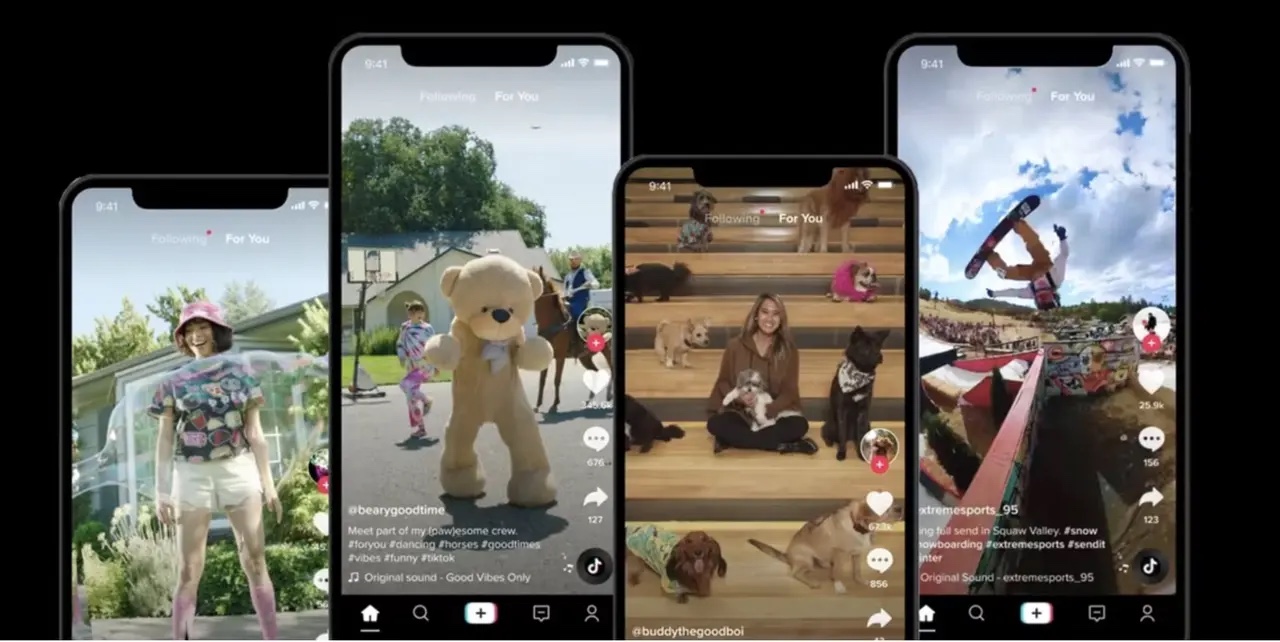 The For You feed is built per-viewer, not per-creator — which is the detail the shadowban story leaves out. (Source: TikTok Transparency Center)
Why your first video stalls: the cold start
Cold start is a plain, well-known problem in every recommendation system, from Netflix to Spotify to a supermarket loyalty app: when something is brand new, the system has no evidence about it, so it cannot confidently show it to anyone.
Think of a new dish in a restaurant. The kitchen doesn't put it on every table on night one. They offer it to a handful of diners, watch whether plates come back clean, and only then print it on the menu. The dish isn't being punished. It's being tested, because nobody has tasted it yet.
That is exactly what happens to your video. TikTok publishes the pipeline it runs, and it's worth actually looking at:
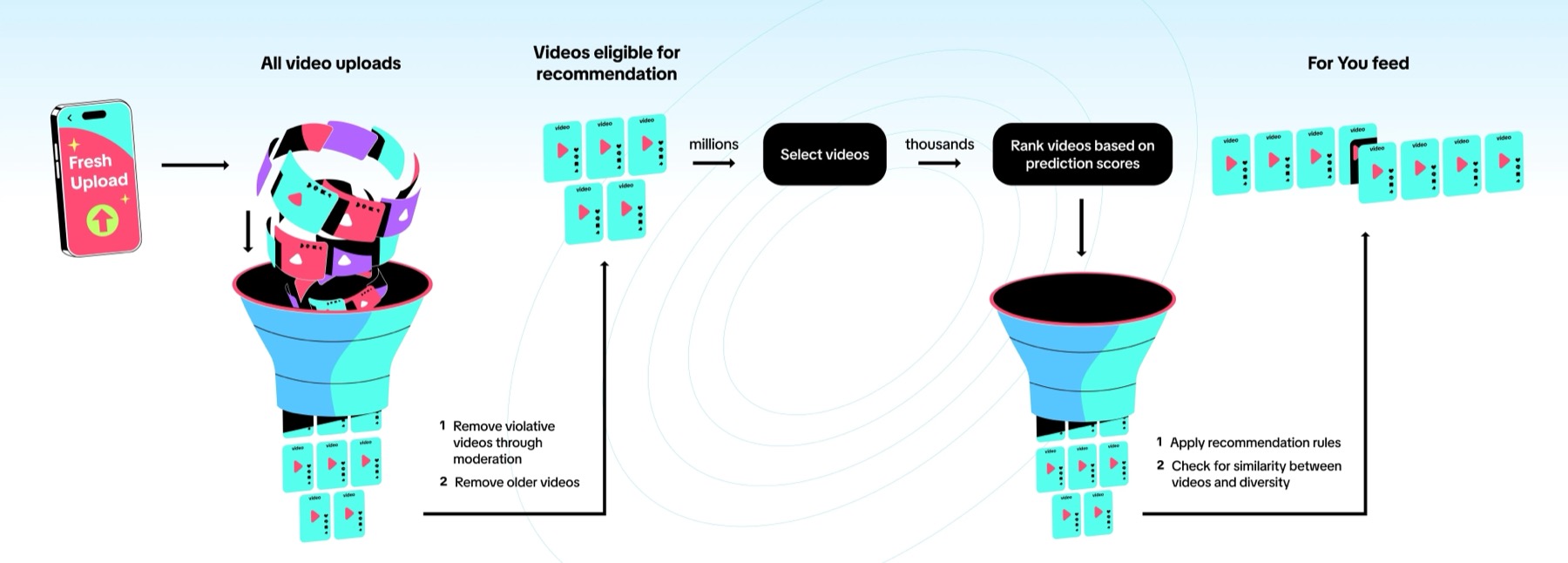 TikTok's own published pipeline: upload → moderation → eligible pool (millions) → selection (thousands) → ranking → For You feed. (Source: TikTok Transparency Center)
Look at what that diagram does not contain. There is no box called "check how old this account is." There is no "new creator penalty" stage. A video enters the eligible pool by passing moderation — not by serving a waiting period.
The one age rule TikTok actually documents is about the creator's human age, not the account's: content from accounts registered to users under 16 is ineligible for recommendation. That's a child-safety rule, and it's the exception that shows how specific these rules get when they exist.
So where does your 217 come from? From the ranking step. Your video has to beat other videos on a prediction score — an estimate of how likely a specific viewer is to like, share, comment on, or skip it. With no history, that estimate is made almost entirely from the video itself, tested on a small first audience. If those first few hundred people watch to the end, the estimate improves and the next batch is bigger. If they swipe away at second two, it doesn't.
So what: your view count isn't a verdict on your account. It's a score on your first three seconds.
What the algorithm is actually watching
This is where the warm-up story gets its one genuinely good idea, so let's give it credit properly.
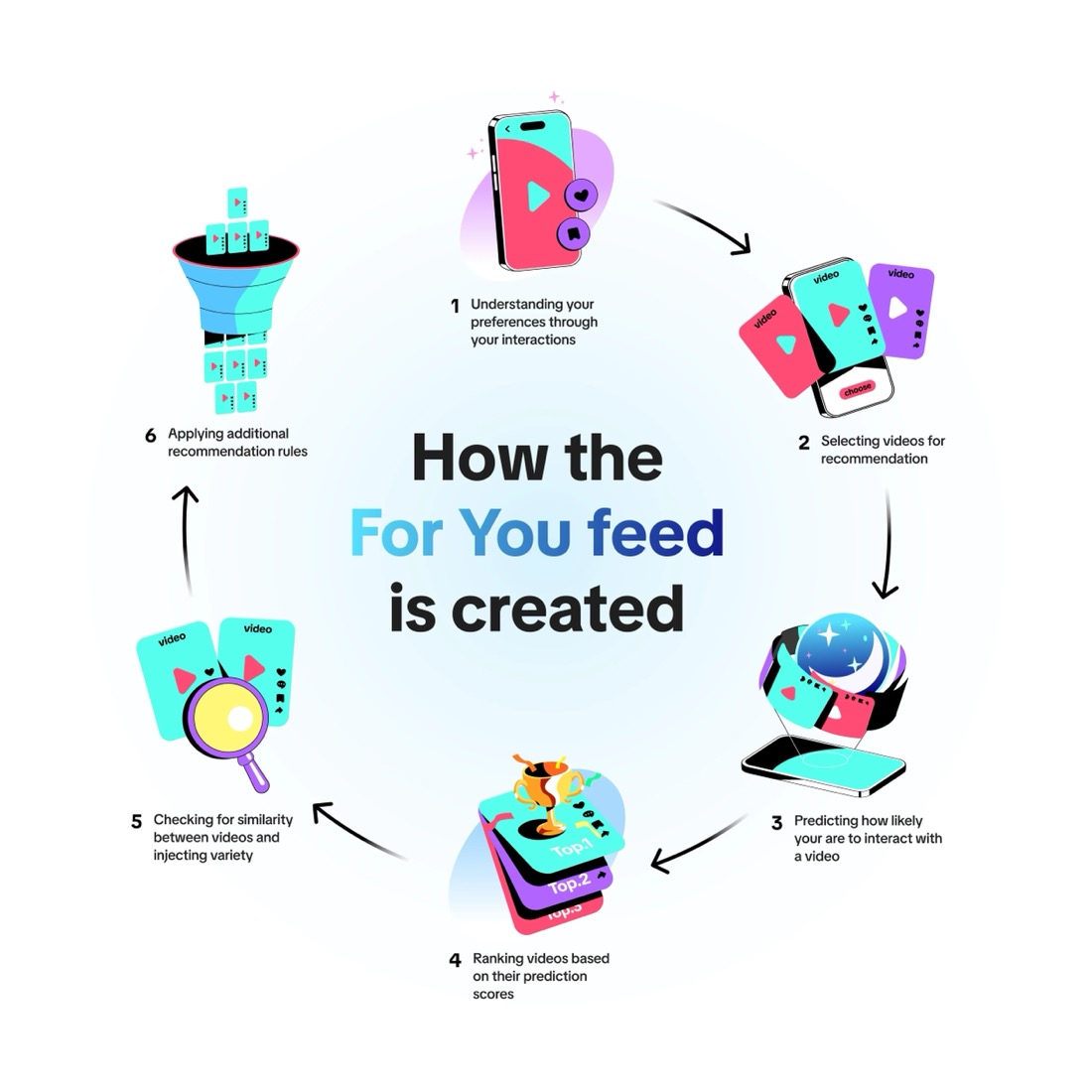 Step 1 is "understanding your preferences through your interactions" — the part warm-up genuinely touches. (Source: TikTok Transparency Center)
Notice that step 1 is about you as a viewer. The signals TikTok lists — videos you viewed, liked and shared — build a picture of what you enjoy. Your region, your device language, and your device's operating system feed in too.
Instagram works on the same shape. Its head, Adam Mosseri, has described a new post as going to a small group first and expanding only if early signals are good — an "audition." He's also repeatedly said follower count doesn't dictate reach, and that business, creator and personal accounts are ranked the same way.
So what: if you scroll for three days, you haven't earned trust. You've told the platform which corner of the app you belong to — which can genuinely help it guess who to show your first video to, because it now knows your neighbourhood. That's a modest, real, second-order benefit. It is not an unlocked gate.
What actually gets your reach cut
Reduced distribution is real. TikTok doesn't use the word "shadowban," but it plainly states that content and accounts can be limited from appearing in the For You feed or in search.
What triggers it, per the published policy, is integrity and authenticity — not youth:
- Fake engagement — buying followers or likes, or trading/marketing services that artificially boost engagement.
- Spam — repeated, automated or unsolicited distribution of content.
- Deceptive account behaviour — impersonation, coordinated inauthentic behaviour, covert influence operations.
- Content that fails moderation — it never enters the eligible pool at all.
Read that list against the warm-up world and something uncomfortable falls out: the behaviours that actually cause restriction are the ones common in bulk-account operations. Many accounts from one IP. Automation. Recycled footage. That is precisely the crowd that invented warm-up, and warm-up is a rational defence for them.
⚠️ If your "warm-up" involves buying engagement, running bots, or automating likes to look active, you have not avoided a restriction — you've done the exact thing the policy names. The ritual and the violation are one keystroke apart.
What it costs you
 Three days of deliberate scrolling is 1.5 hours you didn't spend filming. (Photo: Pexels)
Warm-up is free in money and expensive in the only currency that matters early on.
- Time: three to ten days, at roughly 20–30 minutes a day. Call it 1.5 to 5 hours.
- Delay: every day not posting is one fewer video, and therefore one fewer real datapoint about what your audience responds to.
- Discipline: it only works if you scroll your actual niche. Three days of drifting into whatever the feed serves teaches the system the wrong neighbourhood.
- Attribution damage: this is the hidden one. Once you believe warm-up is why videos succeed, every flop gets blamed on the account instead of on the video, and you stop improving the thing you control.
Here's the check worth running before you blame your account age — it takes 30 seconds in your own analytics:
Open the video's analytics and read three numbers:

1. Traffic source — "For You" %
   > 50%   → you ARE being recommended. It's a cold start. Post again.
   near 0% → distribution problem. Check for a violation notice.

2. Average watch time ÷ video length  (completion rate)
   < 30%   → the video is the problem, not the account.

3. Same pattern across your last 3+ videos?
   Yes     → look at the account. No → look at that one video.
What this does: it separates the two explanations. A healthy For You percentage with a weak completion rate means the system did show your video to people and they left — which no amount of warming up will fix.
When warm-up is worth it
There are real situations where the three days pay for themselves:
- You're running multiple accounts. Agency work, clipping operations, several brand accounts on one device or IP. The integrity systems are genuinely looking for coordinated patterns, and behaving like distinct humans is a legitimate defence.
- Your device profile contradicts your target audience. A fresh account on a device set to one language, on a SIM from one country, aiming at viewers in another. Region and device language are documented signals — giving the system a few days of the right consumption helps it place you.
- You're repurposing a dormant or personal account. Its interest profile currently points at whatever you watched in 2022. Retraining it toward your niche before you pivot is real work with a real effect.
- It costs you nothing. If you'd be scrolling anyway, scroll deliberately inside your niche. There's no downside to a free habit.
When NOT to bother
 For a single personal account, the three days are better spent on the first three seconds of the video. (Photo: Pexels)
- One account, your own phone, your own original videos. You're solving a problem you don't have. Do instead: post today, and spend that time rewriting your opening hook. Three posted videos teach you more than three days of scrolling.
- As a cure for an established account that's slowed down. Your account isn't "cold" — it has plenty of history. Do instead: pull completion rate on your last ten videos. A slowdown is almost always retention, format fatigue, or a niche you drifted out of.
- When it means buying or faking engagement. Do instead: nothing. Genuinely nothing is better — the policy names this exact behaviour as grounds for restriction.
- As a reason to delay launching. If warm-up is why you haven't posted in two weeks, it has stopped being a strategy and become procrastination with a technical excuse. Do instead: post the imperfect video.
- When you're following a rigid day-by-day script from a proxy vendor. The "7–10 days or shadowban guaranteed" numbers are not published by any platform and aren't backed by any independent study. Do instead: treat warm-up as a soft habit, not a protocol with a countdown.
Warm-up vs the alternatives
| 3-day warm-up | Just post today | Buy engagement | |
|---|---|---|---|
| Time cost | 1.5–5 hours, launch delayed | Zero | Minutes |
| Money | $0 (unless you buy tools) | $0 | $20–200+ |
| Documented by the platform? | No such gate is published | n/a — the default | Yes — as a violation |
| Helps the system place you | Yes, modestly (viewer profile) | Slower, but happens anyway once you post | No |
| Real risk | Lost momentum, wrong attribution | First videos test small — normal | Restriction from For You & search |
| Best for | Multi-account operators, region mismatch | Almost every individual creator | Nobody |
📺 How TikTok Knows What You Like, TikTok's Algorithm Explained — Emerging Insights
The verdict
- Skip it if you're one person posting original videos from your own phone. Your first video stalling at ~200 views is the system testing it, not punishing you. Post the next one.
- Do it if you're running several accounts from one device or IP, or if your device's region and language don't match the audience you're aiming at. Here the risk you're defending against is documented and real.
- Never fake it. The moment warm-up means purchased likes or automation, you've crossed from a harmless ritual into the behaviour the policy actually restricts.
- Do this next: open your last video's analytics, check the For You traffic percentage and the completion rate. Those two numbers will tell you in thirty seconds whether you have an account problem or a hook problem. It's nearly always a hook problem.
FAQ
Is my new account being throttled on purpose? No documentation from TikTok or Instagram describes a new-account penalty. TikTok's published pipeline has no account-age step, and Instagram has said follower count and account type don't dictate ranking. Small first-batch reach is how cold start works for everyone.
Does warm-up do anything at all, or is it pure superstition? It does one real thing: your scrolling builds your viewer interest profile, which gives the system a better idea of which niche you sit in. That's a genuine but second-order effect — far weaker than the quality of the video you post.
I run five brand accounts from one laptop. Same answer? No — this is the case where warm-up earns its keep. Coordinated inauthentic behaviour and spam are explicitly named in the policy, and multiple accounts sharing a device and IP is the pattern those systems look for.
What does it cost me to skip warm-up? Effectively nothing for a single genuine account. What it costs to do it is 1.5–5 hours plus a delayed launch — and the risk of blaming your account for what is really a weak opening three seconds.
How do I tell a real restriction from a cold start? Check the traffic-source breakdown. If a meaningful share of views comes from "For You," you're being recommended and it's a cold start. If For You is near zero across several videos, look for a violation notice in your inbox and review the Community Guidelines.
Should I delete the account and start over? Almost never. Deleting resets whatever profile you've built and gives you a genuinely cold account. Fix the video format first.
References
- Introduction to the TikTok recommendation system — TikTok Transparency Center — the published pipeline, signals and recommendation rules
- How TikTok recommends content — TikTok Support
- Integrity and Authenticity — TikTok Community Guidelines — fake engagement, spam and deceptive behaviour
- TikTok Community Guidelines — moderation and For You feed eligibility
- Images 1–3: official diagrams from the TikTok Transparency Center. Images 4–5: Pexels
#ColdStart #RecommenderSystems #TikTokAlgorithm #ContentStrategy #CreatorEconomy #SocialMediaMarketing #AlgorithmExplained #TechForBeginners
✍️ The Author: Do Ngoc Hoan Founder of CookConnects.ca & Wizy.ca. Bridging the gap between advanced algorithms and business execution. I write for technical founders looking to scale their impact with AI and robust engineering.