Don't Let AI Just Be a "Typist" – Turn It Into a True "Butler" With AI Agent Protocols
Instead of writing glue code for AI to understand data, AI Agent Protocols provide a "common language" enabling AIs to communicate, use tools, and collaborate autonomously. It's time to upgrade your AI into a true "butler"!
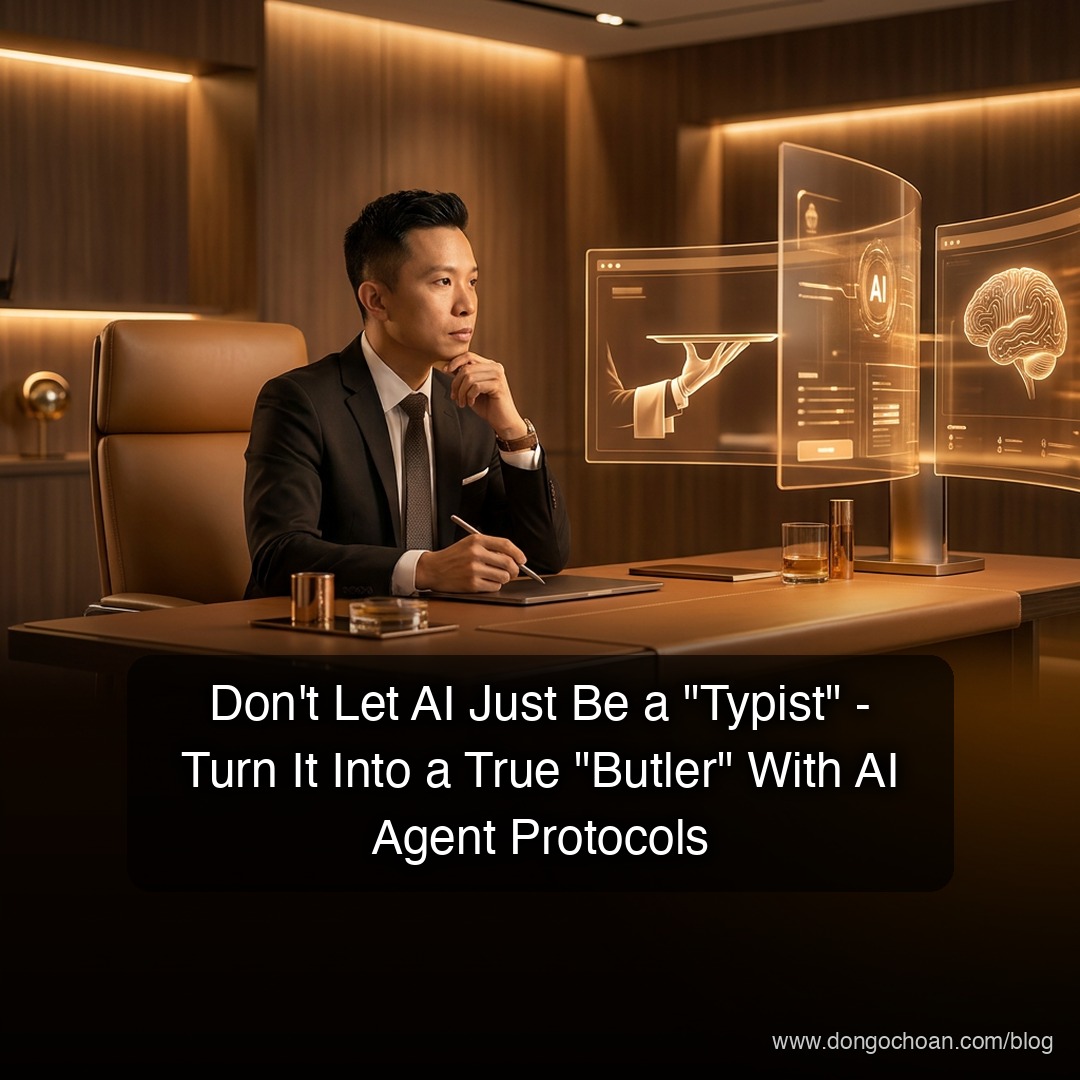
If you work in tech, you've probably lost your mind writing piles of "glue code" (integration code) just to get an AI to understand data from Notion or send an email. Good news: The era of manual AI wrangling is coming to an end, as AI Agent Protocols are here to save the day!
Why Should You Care About AI Agent Protocols?
To put it simply, each AI model used to be like a chef speaking a different language. One only knew how to use a gas stove, while another only understood wood-fired ovens. If you wanted them to collaborate on a feast, you had to stand in the middle acting as an exhausted interpreter.
AI Agent Protocols provide the "common language" and "rules of engagement" so that:
- AIs understand how to use tools autonomously without us spoon-feeding them code.
- One AI can "call" another for backup (like the grill master asking the salad chef for help).
- Data flows seamlessly across platforms without bottlenecks.
6 Key Protocols You Need to Know
Here is a breakdown of the core protocols mentioned by Shubham Saboo, simplified for easy understanding:
1. MCP (Model Context Protocol) – The "Knowledge Bridge"
This standardized protocol helps AI access your database, local files, or Google Drive. Instead of writing custom APIs, MCP allows AI to securely "see" and interact with your data directly.
2. A2A (Agent-to-Agent) – "Professional Gossip"
This protocol allows Agents to talk to each other. For example: A Project Manager Agent can instruct a Coder Agent, "Hey, fix this bug," and they will handle it together—terminating your need to intervene.
3. UCP (Unified Commerce Protocol) – "Holding the Purse Strings"
Designed for tasks related to transactions, inventory checking, and purchasing. Your AI can automatically check if inventory is running low and place an order to restock if necessary.
4. AP2 (Agentic Payment & Authorization) – "Signing Checks Online"
It grants secure payment permissions. You give the AI a spending limit, and it will handle paying bills or server costs while keeping expenditures fully under your control.
5. A2UI & AG-UI – "The Face of AI"
These help AI dynamically generate dashboards or streaming interfaces, making it much easier to monitor task progress instead of staring at walls of rapidly scrolling text.
Real-World Example: Managing an AI "Pub"
Imagine you're running a restaurant:
- MCP tells the AI how many kilograms of beef are left in the fridge (data access).
- A2A allows the "Order" AI to tell the "Kitchen" AI to prepare a dish (internal communication).
- UCP enables the AI to automatically order more beer when it notices customers are drinking it fast (commerce).
- AP2 lets the AI pay the suppliers automatically (payments).
You can just sit back with a coffee and monitor everything through a sleek A2UI screen!
Conclusion
The AI world is shifting from "Chat" to "Act" (Action). Mastering these protocols is like learning how to use the electrical grid instead of constantly tinkering with a diesel generator. They form the infrastructure needed to build truly powerful AI systems.
Are you ready for your AI to "evolve"? Leave a comment below suggesting what you want your AI to handle autonomously!
Reference: Shubham Saboo's X Thread
✍️ The Author: Do Ngoc Hoan Founder of CookConnects.ca & Wizy.ca. Bridging the gap between advanced algorithms and business execution. I write for technical founders looking to scale their impact with AI and robust engineering.