AI and Warfare: When Tech Bros Build the Operating System for Bombs
The US military is building an "OS for war" with Silicon Valley's tech giants like Palantir and Anduril. How do everyday tools like Kafka, Spark, and LLMs power the Maven Smart System to automate the battlefield?
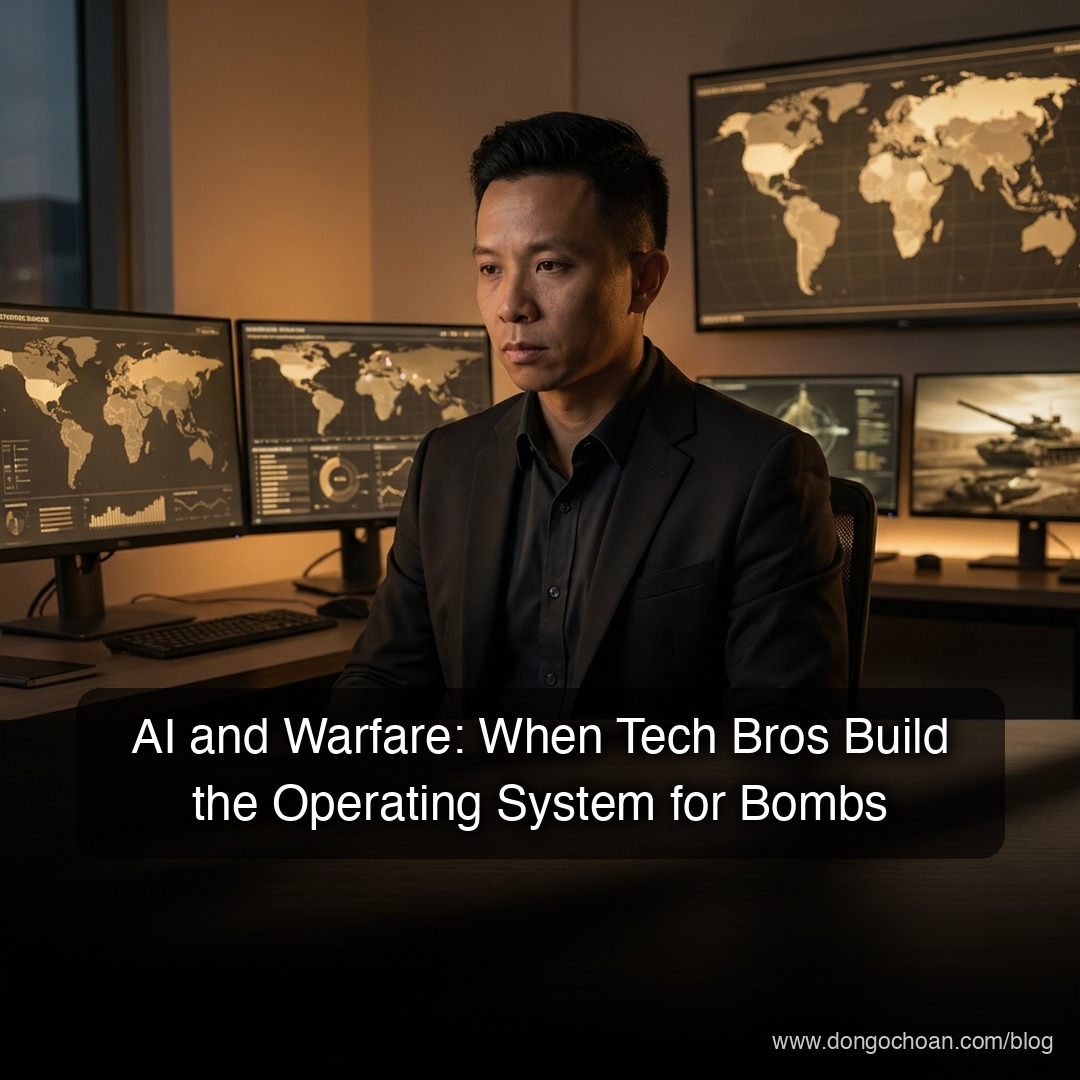
Many still think AI is just about writing emails or arguing with ChatGPT about grammar. Far from it! The US military is going "all-in" on an AI operating system called Maven Smart System – a platform that reduces the time from identifying a target to "firing" to an incredible speed.
1. Maven Smart System: When the Battlefield Gets an "OS"
Previously, striking a target required layers of verification: analyzing satellite imagery, cross-referencing field reports, and manually checking to avoid friendly fire. Now? Maven acts as a central "brain," leveraging computer vision to sift through billions of hours of drone footage. It automatically identifies targets— distinguishing a tank from a civilian vehicle—and prioritizes them in real-time.
To put it simply: It’s like using the Grab app, but instead of finding the nearest driver to book a ride, Maven finds the nearest "target" to... deliver a payload.
2. The "Tech Bros" Squad and the Giants Behind Them
Building an "operating system for war" requires the heavy-hitters of Silicon Valley:
- Palantir (Peter Thiel): Acts as the "glue" that connects everything together.
- Anduril: Specializes in providing the lethal hardware, like kamikaze drones and underwater autonomous vehicles.
- The Cloud Giants: AWS and Azure handle the massive server infrastructure needed to run these operations.
- OpenAI & Anthropic: Provide Large Language Models (LLMs) to process information. (An interesting twist here: Google employees protested, forcing Google to pull out. Anthropic’s leadership was reportedly distressed learning their models were used for warfare. Meanwhile, Sam Altman’s OpenAI swooped in to secure the contract).
3. Unpacking the Tech Stack: What Code Powers the Weapons?
While the specifics are classified, looking at the operational model, the underlying software architecture resembles the very tools developers use every day:
- Data Ingestion: Tools like Apache Kafka stream millions of data points from drones, satellites, and GPS coordinates into a central hub in real-time.
- Data Processing: Apache Spark steps in to transform raw, unstructured data into actionable intelligence (e.g., filtering tank silhouettes from raw drone video feeds).
- The Ontology: This is Palantir’s "secret sauce." Instead of traditional relational databases (SQL), they utilize Graph Databases (like Neo4j).
- Example: A soldier is a "Node," a vehicle is a "Node," and the action of "driving" is an "Edge" connecting them. When everything is mapped into a network, the AI can query and comprehend the entire battlefield as a living entity.
- AI Agents: Leveraging systems like the Model Context Protocol (MCP), AI agents are deployed and given permissions to "take actions" based on the synthesized data.
4. "Human in the Loop": The Final Button
No matter how intelligent the AI becomes, the US military currently guarantees there is a human sitting at a console to click "Accept all cookies" (well, actually, the launch button). However, with the staggering processing speed of these systems, the human sometimes just acts as a procedural rubber stamp, as the AI has already served up the definitive analysis on a silver platter.
Conclusion
Modern warfare is no longer just about who has more troops; it’s about who has the better "Ontology" and who can process data faster. It might seem distant, but the tools we code with daily—Kafka, Spark, LLMs—are actively shaping the destiny of the world, literally and figuratively.
Should we be worried when AI no longer just "hallucinates" words on a screen, but can potentially make lethal mistakes on the battlefield?
Reference Source: Tech bros optimized war… and it’s working by Fireship (The Code Report).
✍️ The Author: Do Ngoc Hoan Founder of CookConnects.ca & Wizy.ca. Bridging the gap between advanced algorithms and business execution. I write for technical founders looking to scale their impact with AI and robust engineering.