CES 2026: When AI Gets "Hands and Feet" – The Rise of Physical AI
CES 2026 marks the rise of Physical AI. Learn how AI is moving beyond digital screens to gain physical embodiment through Edge Computing and advanced system architecture.
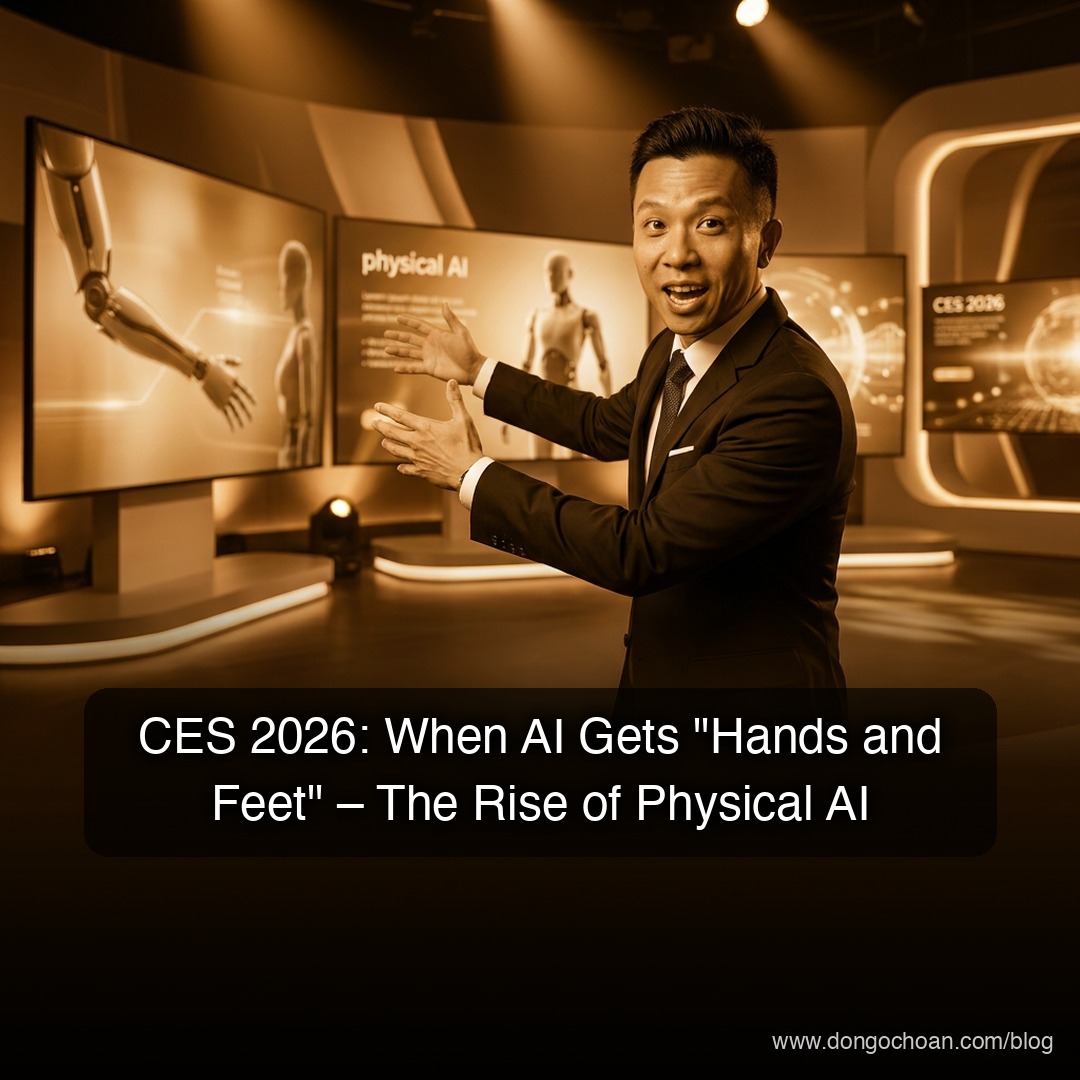
For a long time, we viewed AI as a digital brain—capable of processing data and generating content—and robotics as the mechanical body. At CES 2026, this boundary has officially dissolved. Physical AI has transitioned from experimental research to the core system architecture of next-generation hardware.
1. What is Physical AI?
Unlike traditional Large Language Models (LLMs) that "think" in abstraction, Physical AI acts upon the physical world. It incorporates "proprioception"—the ability to sense body position and movement—and understands physical causality.
To achieve this, AI requires a "nervous system" capable of millisecond reflexes. Relying on cloud processing is no longer viable for tasks where a split-second delay could result in a mechanical failure or a safety hazard.
2. The Architectural Shift: From Conversation to Action
The move toward "Physical AI" necessitates a fundamental redesign of system architecture:
- Edge Computing: Processing must occur locally on the device's silicon. Real-time decision-making (latency under 1ms) is critical for autonomous movement and interaction.
- Multimodal Sensor Fusion: Beyond computer vision, AI systems now integrate tactile feedback (force sensors), haptics, and LIDAR-based depth sensing. Orchestrating these massive data streams requires high-throughput data buses.
- Precision Actuation: The loop between perception and mechanical response must be seamless. Modern architecture focuses on converting probabilistic AI outputs into deterministic mechanical commands.
3. Why It Matters for Developers and Product Managers
- The Convergence of Vibe Coding and Hardware: As AI understands the physical world, embedded systems programming is becoming more accessible. We are moving toward natural language interfaces for hardware control, reducing the complexity of traditional C++/RTOS development.
- New Market Frontiers: We are seeing an explosion in Smart Home ecosystems, Warehouse Automation, and Healthcare Robotics. PMs are shifting focus from managing pixels and UI to managing "kinetic performance" and physical reliability.
- Safety-Critical Guardrails: Unlike a chatbot error, a mistake in Physical AI can have real-world consequences. Current architectures prioritize multi-layered hardware/software guardrails to ensure functional safety.
Conclusion
Physical AI at CES 2026 marks the era where AI finally gains "hands and feet." It is a revolution in machine design: making our devices smarter, more reactive, and more deeply integrated into our daily lives. We are moving from AI that knows everything to AI that does everything.
What are your thoughts on the embodiment of AI? Is this the ultimate productivity booster or the beginning of a higher-risk technological era?
#AI #PhysicalAI #CES2026 #SystemArchitecture #Robotics #HardwareInnovation #Engineering