Google Maps Gets a Gemini Brain: From Navigation App to Your Personal AI Travel Assistant
Google Maps now has a Gemini brain — ask it like a local friend, preview destinations in 3D, and never miss a lane again. Here is everything that changed and why product builders should pay attention.
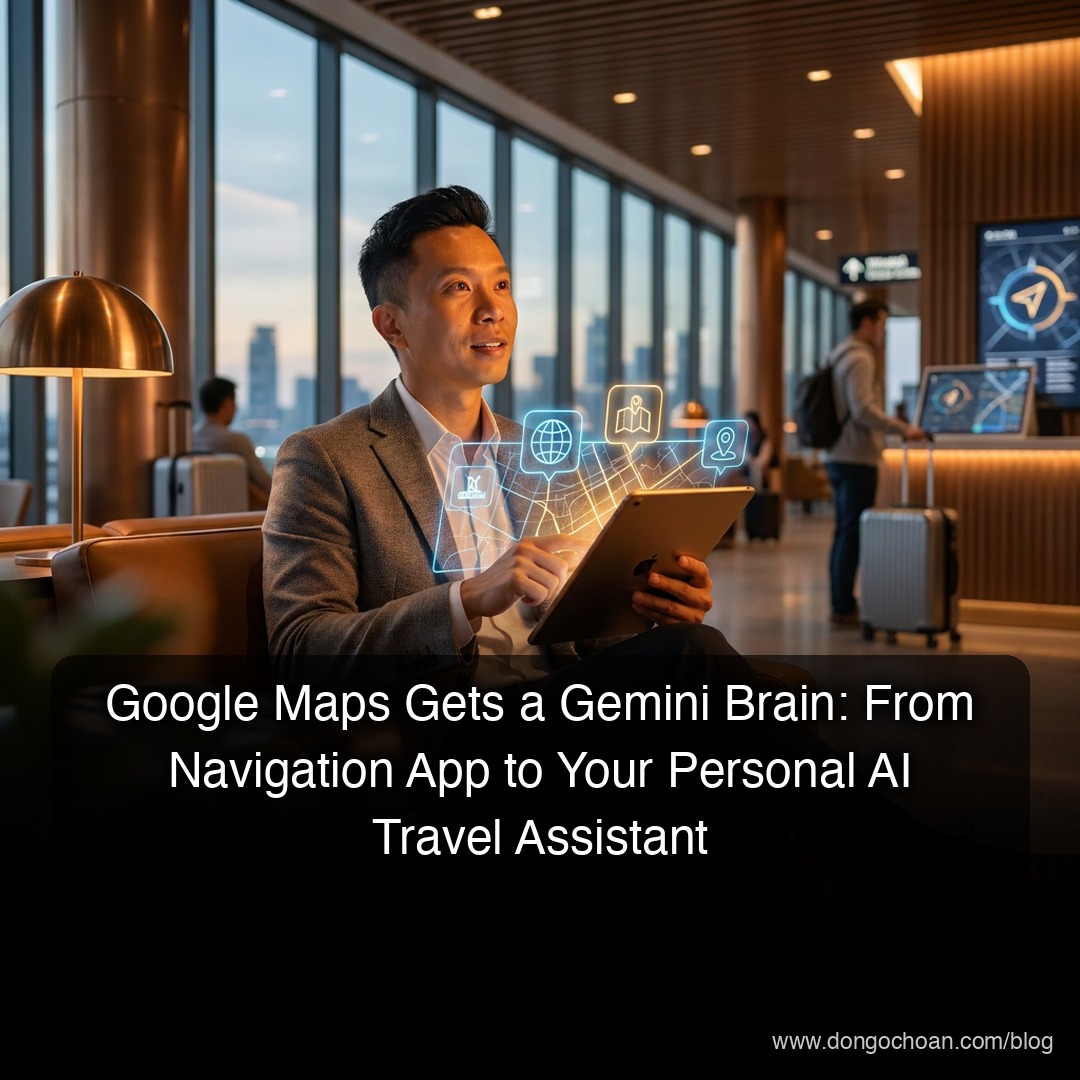
Gone are the days of endlessly scrolling through reviews or agonizing over travel plans. Google has officially integrated Gemini AI into Maps, transforming the familiar navigation app into a genuinely intelligent travel assistant.
1. When Google Maps Learns to "Listen and Understand"
Instead of typing dry keywords like "Italian restaurant downtown," you can now ask Maps like you would a knowledgeable local friend:
"Find me somewhere to hang out with friends in the evening in Saigon — good vibe, reasonable prices."
Gemini will sift through data from over 250 million places and billions of reviews to surface a curated shortlist. It even summarizes why each spot is worth visiting — something like: "This place has great live music, solid cocktails, and works well for larger groups." No more wading through walls of text.
2. "See It Before You Go" with Immersive View
Immersive View uses AI to generate a highly realistic 3D simulation of a location or a route before you leave home.
Planning a road trip or exploring an unfamiliar neighborhood? Activate this feature to see real weather forecasts and live traffic conditions layered onto your route. It feels like having a drone camera overhead — incredibly useful for making that go/no-go decision without stepping out the door.
3. Smarter Driving, Zero Stress
For drivers, the new Google Maps delivers genuine quality-of-life improvements:
- Hyper-detailed lane guidance: No more last-second lane changes that test your fellow commuters' patience. Maps maps out the exact lane markings well in advance.
- Predictive parking: It proactively suggests nearby parking spots and even maps out the walking route from the garage to your final destination.
4. Why Should Tech-Minded People Care? (A Product Lens)
From a software engineering and product management perspective, this Google Maps evolution signals a very clear industry trend:
From Search (Find Information) → Actions (Get Things Done)
Google no longer just wants users to find answers and leave. The goal is to keep users planning and executing entirely within their ecosystem. This is a masterclass in modern UX strategy that product builders should study closely: turn raw data into high-value, actionable recommendations.
Have you already gotten this update? Drop a comment below — I'd love to hear whether Gemini Maps feels genuinely smart or just a clever rebrand!
#GoogleMaps #Gemini #AI #UX #TechTrends #ProductThinking
✍️ The Author: Do Ngoc Hoan Founder of CookConnects.ca & Wizy.ca. Bridging the gap between advanced algorithms and business execution. I write for technical founders looking to scale their impact with AI and robust engineering.