Google Stitch: How "Vibe Design" is Reshaping the Future of UI/UX
Discover Google Stitch, an infinite canvas design tool that uses AI to turn ideas into fully interactive prototypes without wireframes or manual coding, challenging the dominance of Figma and Tailwind.
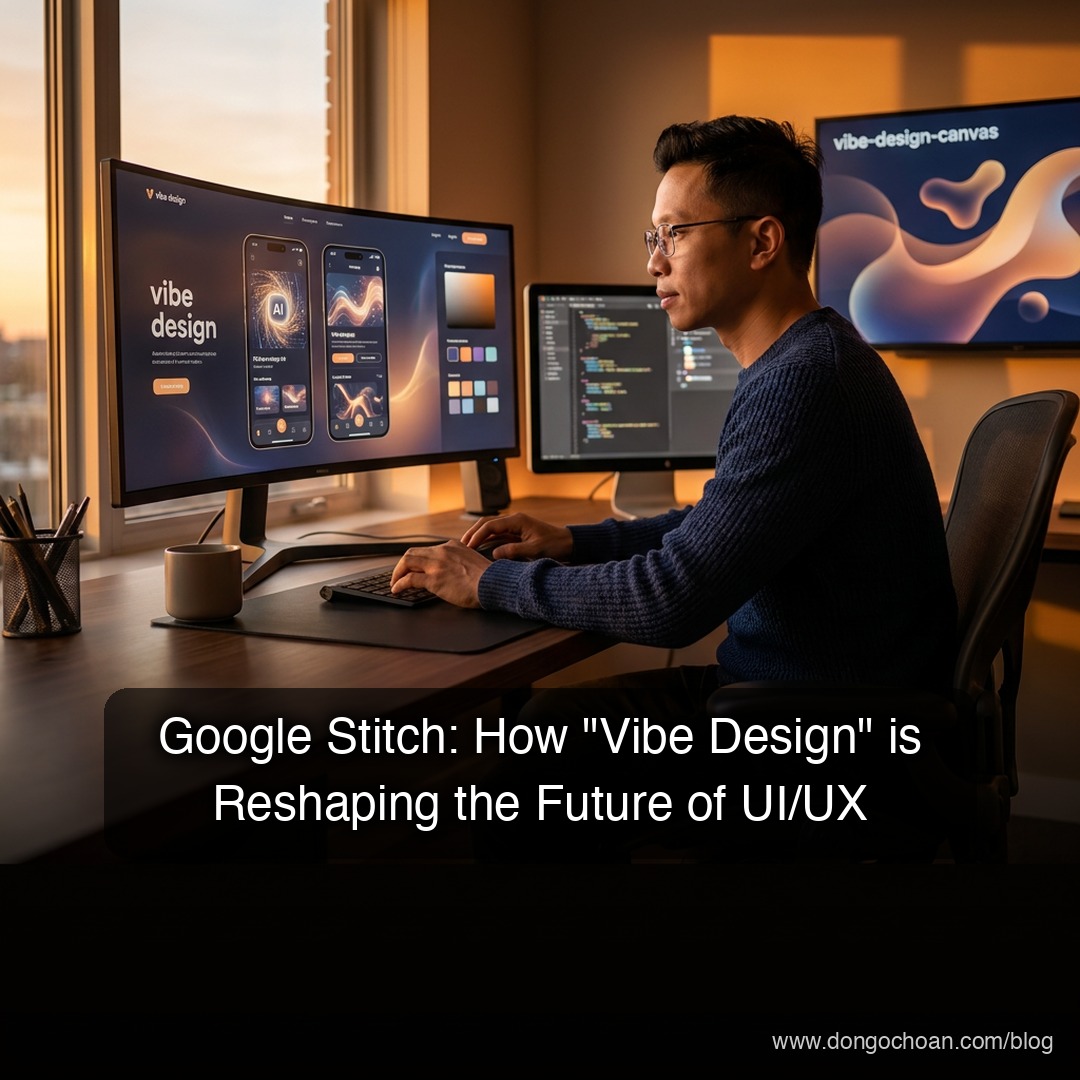
The End of Manual Interface Design?
If you are a designer or developer accustomed to spending hours manually dragging and dropping interface elements, it's time for a paradigm shift. Google has just unveiled "Stitch"—a breakthrough that could make even industry giants like Figma nervous. No more wireframes, no more tedious CSS or Tailwind coding. With Stitch, all you need is a "vibe."
1. What Exactly is Google Stitch?
Forget the meticulous tweaking of individual buttons or hex codes. Google Stitch is an infinite canvas tool that allows you to generate entirely functional app or website interfaces merely by describing them.
It operates on a revolutionary philosophy called "Vibe Design":
- Versatile Inputs: You can provide a screenshot, a link to a website you admire, or even voice-dictate your conceptual ideas.
- AI Magic: Driven by advanced AI, the platform automatically renders a complete, polished UI—perfecting everything from the macro layout to the micro typography based solely on the "vibe" you supply.
2. From "Vibe" to Prototype in Seconds
The true genius of Stitch lies beyond generating attractive static images. It breathes life into designs:
- Fully Interactive: Every generated element acts as an interactive component.
- Automated Workflows: With a single click, the static design morphs into a complete prototype, accurately simulating the user flow.
- Conversational Editing: You can converse directly with Gemini to refine your work. Prompts like "Make this button stand out more" or "Shift this interface to a sharp, modern aesthetic" yield instantaneous updates.
3. Disruption for Figma and Tailwind?
Looking ahead in the tech landscape of 2026, manually typing utility classes like flex or bg-blue-500 seems increasingly obsolete. Artificial Intelligence can handle these structural styling tasks significantly faster and often more effectively.
Most notably, Stitch allows you to export your UI as Design Markdown. This output serves as the ultimate bridge, enabling seamless handoffs to AI coding agents like Claude or OpenAI to instantly functionalize the design. The synergy between "Vibe Design" and "AI Coding" is dramatically streamlining the journey from zero to one in product development.
The Bottom Line
AI won't replace designers, but it will undoubtedly eliminate the repetitive drudgery of the design process. Google Stitch is a definitive statement: The future of digital creation is the direct intersection of raw ideas and AI prompt engineering. Are you ready to converse your interfaces into reality, or will you stick to traditional pixel-pushing?
✍️ The Author: Do Ngoc Hoan Founder of CookConnects.ca & Wizy.ca. Bridging the gap between advanced algorithms and business execution. I write for technical founders looking to scale their impact with AI and robust engineering.