Wizy Subs: The Subscription Tracker You Run From ChatGPT, Not an App
Wizy exposes an MCP endpoint so ChatGPT and Claude can add subscriptions and answer "what renews this week?" without you opening the app. Plus normalized monthly spend, 7-3-1 reminders, and card-aware tracking that stores no card data.
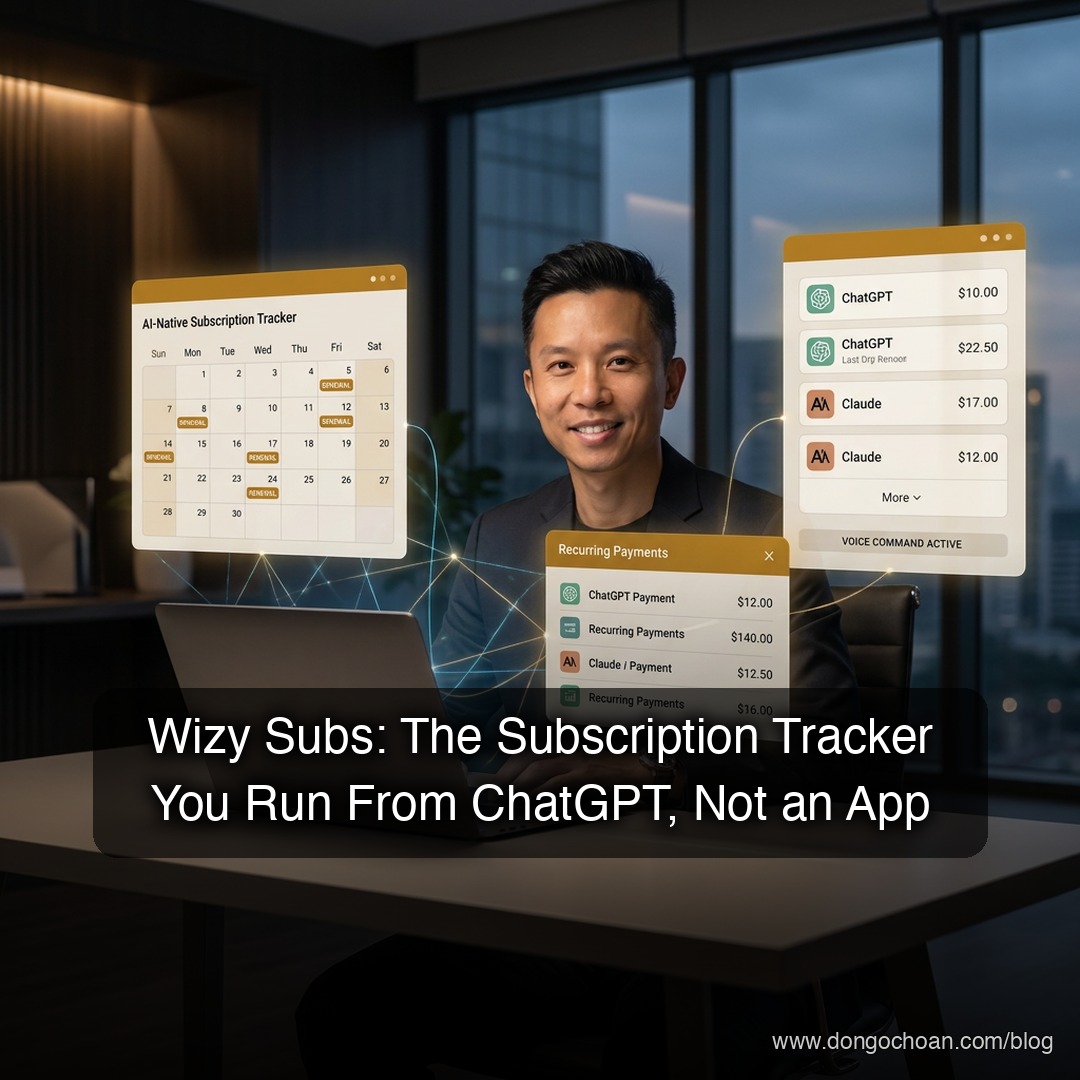
Every few months another charge lands on the card for something nobody remembers signing up for. The trial that quietly converted. The annual plan that renewed while you were on holiday. The tool a teammate needed once, in 2023.
The problem is rarely the money on any single line. It is that subscription spend is scattered across weekly, monthly, quarterly and annual cycles, spread over three different cards, and invisible until the statement arrives. subs.wizy.ca — Wizy Subscription Tracking — is built around that specific blind spot, and it makes one architectural bet most expense apps have not made yet: the primary interface is not the app.
1. The Headline Feature: MCP Integration, or "AI-Ready" by Design
This is what genuinely separates Wizy from conventional expense trackers.
Wizy exposes an MCP (Model Context Protocol) endpoint at /mcp, which lets AI clients like ChatGPT and Claude connect to it directly as a tool.
The practical result is a zero-UI experience. You never open the app:
- "Add Figma at $15/month" — the assistant writes it into your account.
- "What's renewing this week?" — the assistant queries and answers.
The AI calls Wizy's API on your behalf over an authenticated connection. No dashboard, no form, no context switch. Wizy stops being a destination you visit and becomes a data source your personal AI assistant already has access to — which is a fundamentally different position in a user's workflow.
2. Normalized Spend Analytics: One Honest Monthly Number
Most people hold a genuinely messy portfolio: one tool billed weekly, three monthly, a quarterly plan, two annual licences. Comparing or totalling them mentally is near impossible, which is exactly why the true figure stays comfortably vague.
Wizy converts every billing cycle into a single normalized monthly figure and a single annual figure.
That is a deliberately uncomfortable design choice, and the right one. Seeing "you are spending $340/month, $4,080/year" is what turns a vague suspicion into an actual decision. You cannot cut what you have never totalled — normalization is what makes the subscription bleed visible enough to act on.
3. Card-Aware Management, Without Storing Card Data
Wizy's approach to payment methods is smart precisely because of what it refuses to store.
It holds no card numbers and no CVVs — only memorable labels: Personal Visa ••4242, Business Amex ••3005. Each subscription is tagged with the label that pays for it.
The payoff shows up during the crisis. A card expires, or gets lost and reissued, and the usual scramble begins: which services are about to fail? In Wizy you filter by that one label and immediately see every subscription charging to it — then update them deliberately instead of discovering the damage through a cascade of failed-payment emails.
Full utility of card-aware tracking, none of the liability of card-data storage.
4. Smart Renewal Reminders: The 7-3-1 Cadence
Wizy emails you 7 days, 3 days, and 1 day before a renewal charges.
The cadence is doing real work. The 7-day notice arrives while cancelling is still a calm, unhurried decision. The 3-day and 1-day notices catch you if you let it slide. A single reminder on the morning of the charge would be a notification; this is a decision window.
After the renewal date passes, entries auto-roll forward to the next cycle with no manual confirmation. The dataset stays current on its own — and a tracker that requires housekeeping is a tracker people abandon by month three.
5. Cancel With Confidence: Deactivate, Don't Delete
When you cancel a service, Wizy deactivates the record rather than deleting it.
This preserves something most trackers throw away. The dashboard stays clean and reflects only what is live, while the history remains intact — so the app can show you how much you have saved by cutting what you no longer use.
That reframing matters more than it looks. Cancelling stops feeling like a chore you occasionally get around to and starts reading as a scoreboard with a number that goes up. The product rewards the exact behaviour it exists to encourage.
The Product Philosophy: Calm Tech, AI-Native
Two threads run through all of it.
Calm Tech. The feature set is narrow on purpose. Wizy is not trying to be a budgeting suite, a net-worth dashboard, or a personal finance platform. It solves two specific pains completely: I forget to cancel things, and I don't know what this actually costs me per month. Everything present serves one of those; everything else was left out.
AI-native positioning. Opening an MCP endpoint is a bet on where interfaces are going. As personal AI assistants become the default entry point for everyday tasks, the tools that win are the ones the assistant can already reach. Most expense apps are still competing for a spot on your home screen. Wizy is competing for a spot in your assistant's toolset — a smaller field, and a much better one to be early in.
For anyone building software right now, that is the transferable lesson: an MCP endpoint is becoming table stakes, not a novelty. The question worth asking about your own product is no longer just how good the UI is, but whether an AI agent can use it at all.
Reference: subs.wizy.ca — Wizy Subscription Tracking
#SubscriptionTracking #MCP #ModelContextProtocol #AINative #ProductDesign #CalmTech #SaaS #PersonalFinance #ChatGPT #Claude
✍️ The Author: Do Ngoc Hoan Founder of CookConnects.ca & Wizy.ca. Bridging the gap between advanced algorithms and business execution. I write for technical founders looking to scale their impact with AI and robust engineering.