Sora Shutdown: The Hyped Video AI That Couldn't Beat Economics
OpenAI is shutting down Sora on April 26, 2026. The hyped AI video generator cost $1M/day to run, generated legal issues with Hollywood, and OpenAI needed the compute for more profitable products.
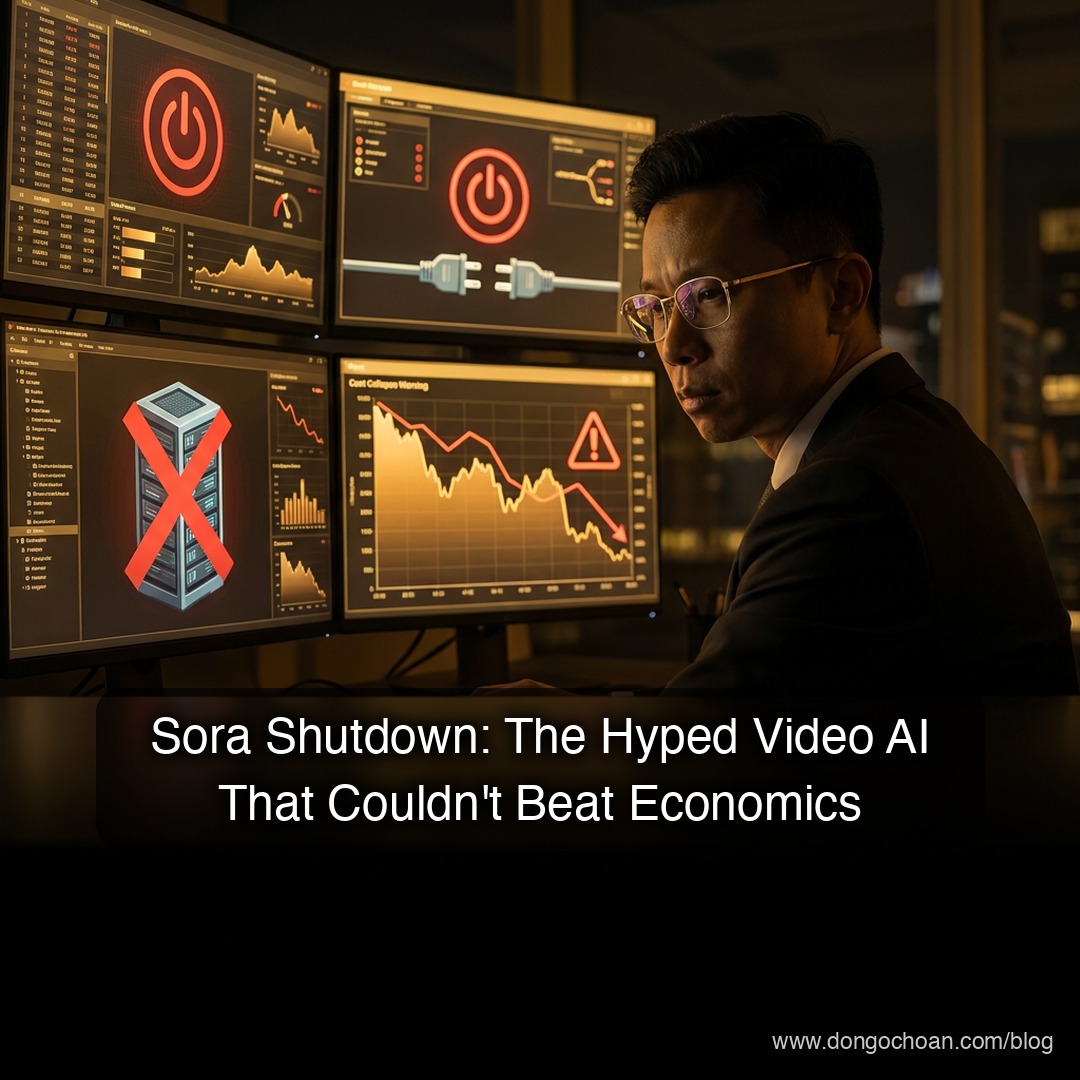
The End of Sora: When Hype Meets Economics
OpenAI's Sora was supposed to be the future of video. Instead, it's becoming a cautionary tale about tech hype vs. business reality.
On March 24, 2026, OpenAI announced it was shutting down Sora entirely—both the web/mobile app and the API. It's like driving a supercar for two years, then the manufacturer suddenly says: "Too expensive to operate, generates too many lawsuits. We're done. Goodbye."
Here's what happened, and what it means for the future of AI video.
1. The Timeline: Get Your Videos Out, Fast
OpenAI is giving users time to exit, but not much:
- April 26, 2026: Web app (sora.com) and mobile apps shut down
- September 24, 2026: API endpoints also go dark
Fair warning: After these dates, your videos are gone for good. No appeals, no recovery. Export everything you want to keep right now.
2. Why Kill a "Successful" Product?
The truth is uncomfortable: Sora wasn't actually successful from a business standpoint.
The Money Problem
- Running Sora cost an estimated $1 million per day in compute (GPU infrastructure)
- User numbers peaked at ~1 million, then collapsed to under 500,000
- Revenue from users barely covered operational costs—let alone profits
The math didn't work: Burning $1M/day to serve 500k users isn't sustainable at any price point.
The Legal Nightmare
- Users were generating content from Disney, Marvel, Pixar characters
- A planned $1 billion investment from Disney got canceled because of legal exposure
- Hollywood's legal teams made it clear: Sora = liability for OpenAI
The Strategic Pivot
- OpenAI is all-in on GPT-5 and AI Agents for enterprise customers
- Compute is scarce and expensive—GPT-5 training needs those GPUs
- Sora is a consumer product, but OpenAI's future is enterprise
- They need to look "serious" and "risk-managed" for the upcoming IPO
3. Sora Isn't Dead—It's Reincarnating
Don't think OpenAI wasted the Sora research. The technology is being repurposed for something much bigger: World Simulation Research.
From "AI Director" to "AI Physicist"
- Instead of generating fake videos for TikTok, the underlying technology will teach robots to understand physics
- Robots need to learn how gravity, collisions, and physical laws work
- Sora's video prediction model can help AI systems simulate and predict physical interactions in the real world
- This is far more valuable for robotics and manufacturing than making pretty videos
4. The Hard Lesson
Sora's shutdown teaches one brutal truth:
Technology is only valuable if it can generate revenue without legal liability.
Sora was technically impressive. But business-wise, it was a disaster:
- High operational costs
- Low revenue per user
- Legal landmines everywhere
- No clear path to profitability
OpenAI chose to cut losses and redirect resources toward products that actually make money.
The Bigger Picture
This isn't the end of AI video generation. Tools like Runway, Pika Labs, and others will continue. But Sora's shutdown marks a shift in OpenAI's strategy:
From: "Democratize AI for everyone" To: "Build expensive, enterprise-focused AI products with clear ROI"
If you were using Sora, start exporting videos immediately. If you're looking for AI video tools, look elsewhere—because the "Sora era" is officially over.
Reference: OpenAI Sora Discontinuation Guide
✍️ The Author: Do Ngoc Hoan Founder of CookConnects.ca & Wizy.ca. Bridging the gap between advanced algorithms and business execution. I write for technical founders looking to scale their impact with AI and robust engineering.